


.gif)
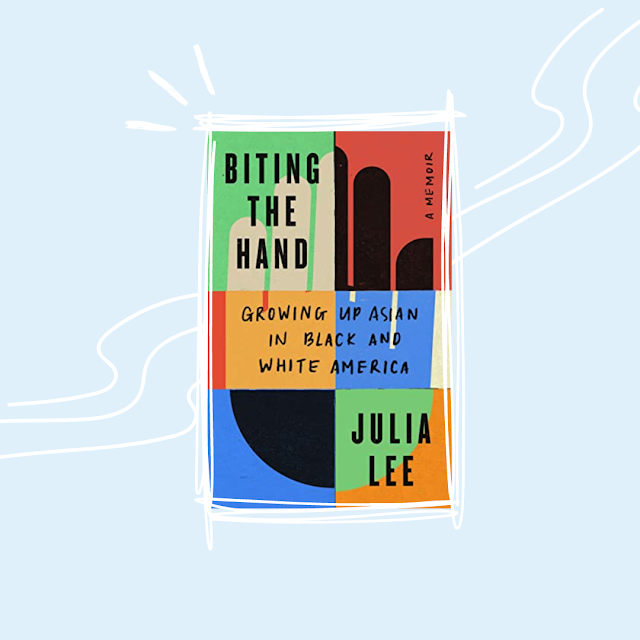
Julia Lee is Angry and So Am I ┃ A Review & Reflection on "Biting the Hand: Growing Up Asian in Black and White America"
9.06.2023

1.24.2023

"In my early twenties, it had never occurred to me that the women who gained their power from beauty were indebted to the men whose desire granted them that power in the first place. Those men were the ones in control, not the women the world fawned over."
For many young women, the saying "beauty is pain" is an all-too-familiar refrain. It is as much an accepted aphorism for our lives as a pithy justification for what our bodies endure, often in service of the male gaze. I hear the phrase reverberate from the social media posts that swear by the transformational power of a green juice or slimming diet; from the articles that claim exercise fads are the key to self-care; and from the mouths of girls in my own life when we discuss what to wear and how to act. When I poke, pluck, and prod at my body, trying to mold it into something that would seem pretty until I can’t tell whether I am doing this work for myself anymore, "beauty is pain" is the earworm that I cannot get out of my head.
1.23.2022
.png)
“I no longer believed that equanimity was either tenable or desirable. It corroded everything inside. I had never met a person with greater equanimity than the former president. But this applied to all of them—to the prosecution and the defense, to the judges and even the other interpreters. They were able to work. They had the right temperament for the job. But at what internal cost?”
12.14.2020

Notwithstanding its success, The Goldfinch relied on clichés rooted in racial and ethnic stereotypes to realize its settings and elevate the protagonist.
I picked up The Goldfinch on a whim during my last visit to the library. While surveying the shelves for books that would inspire me to read again after an intense academic semester, Tartt’s name caught my eye. Previously, I read and enjoyed her novel The Secret History, a fascinating and disturbing exploration of what drives a group of elite college students to murder a fellow classmate. I borrowed The Goldfinch on the promise of The Secret History; at the time, I knew nothing of its plot or its critical acclaim. I was later surprised to find that, despite the dissent of a few literary critics who dismissed the writing as childish, The Goldfinch is a popular and generally well-respected book that I’d simply missed out on. (Granted, I was 12 years old at the time of its release, but as a book blogger I would have expected it to at least cross my periphery). In fact, Tartt’s almost 800-page tome sold over 1.5 million copies within the first months of its release, was hailed by the New York Times Book Review, among others, as “a rarity” and “a smartly written literary novel”, and received the Pulitzer Prize for Fiction in 2014. While reading, I was thus even more surprised to discover how, notwithstanding its success, The Goldfinch relied on clichés rooted in racial and ethnic stereotypes to realize its settings and elevate the protagonist.
4.14.2020

"I want to say the exact right thing, the thing that will take away all her pain and her grief and her guilt, but I know those words don't exist."
In The Lucky Ones, teenagers May and Zach struggle with the aftermath of a school shooting. For May, attending a new high school not even a year after her twin brother Jordan was killed in the band classroom where she hid from the perpetrator feels impossible. For Zach, social isolation and family problems abound when his mother, a lawyer, decides to defend the school shooter. A chance meeting unites the two, and together they grieve, learn, and heal. Liz Lawson's debut novel explores the consequences of school shootings on young survivors.